


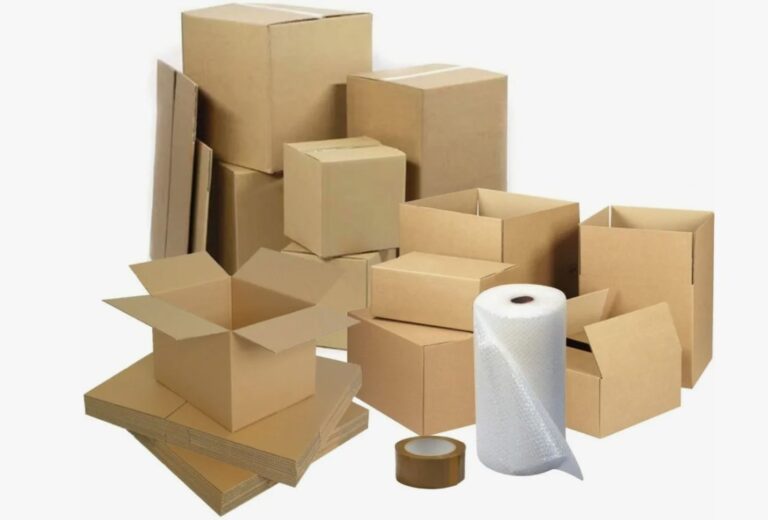
For manufacturing businesses, the process of purchasing packaging in bulk is not merely an operation that facilitates the packaging of products. Choosing the right packaging is a strategic procurement process that has a direct impact on product safety, dispatch costs, production efficiency and customer satisfaction. Particularly for factories engaged in regular production, working with the right packaging supplier helps to reduce costs whilst ensuring that operational processes run more efficiently. In this guide, we will examine in detail the most important criteria to consider during the wholesale packaging procurement process for factories.
Why Should Factories Buy Packaging in Bulk?
Many manufacturing facilities use thousands of cartons, boxes, stretch film, packing tape, cardboard corner protectors or protective packaging products every month. Purchasing these products wholesale rather than at retail offers significant advantages in terms of both cost and supply reliability.
The main advantages of buying in bulk are as follows:
- A fall in unit costs
- The advantage of having stock available at all times
- Ensuring that production continues uninterrupted
- Faster delivery planning
- The ability to take advantage of bespoke production options
- Long-term price stability
- Process management with a single supplier
For factories operating on a regular production schedule, ensuring that packaging is ready at the right time is one of the critical factors in preventing production stoppages.
Identify Your Packaging Needs Accurately
The first step in a successful procurement process is to identify the actual need.
Before placing an order, the following questions must be answered clearly.
What is the weight of your products?
The packaging’s load-bearing capacity must be appropriate for the weight of the product.
Are the products fragile?
For fragile items, additional protective materials such as bubble wrap, dividers or cardboard corner protectors may be required.
Is the shipment being made within the country?
Packaging standards for domestic transport differ from those for exports.
Are the products transported on pallets?
The use of stretch film, strapping and corner protectors is of great importance for palletised shipments.
Do the products have a long shelf life?
For products intended for long-term storage, more durable corrugated cardboard should be used.
This analysis can help prevent the use of packaging that is either unnecessarily expensive or inadequate.
Choose the Right Packaging Products
Every factory has different requirements. For this reason, packaging solutions tailored to production processes should be preferred over standard products.
The most popular wholesale packaging products are as follows:
Corrugated Cardboard Boxes
It is the most commonly used form of transport packaging.
Thanks to its different wave types, it offers different solutions for both light and heavy goods.
Custom-Sized Boxes
Custom-made boxes are preferred for products that do not conform to standard dimensions.
This not only improves product safety but also reduces empty space.
Cardboard Dividers
It prevents glass, metal, plastic and delicate parts from coming into contact with one another.
Cardboard Corner Protectors
It is one of the key protective products that prevents goods from being crushed during palletised shipments.
Clothesline
It enhances product safety during transport by securing the pallets.
Packing Tape
It is one of the essential products in the packaging process.
The conveyor belt must be selected to suit the weight of the product.
Check the Quality of the Packaging Material
When purchasing packaging in bulk, focusing solely on price may lead to higher costs in the long run.
A high-quality packaging product should have the following characteristics.
- High load-bearing capacity
- It does not deform easily
- Minimal susceptibility to moisture
- High-quality cutting
- Homogeneous cardboard structure
- High-quality printing surface
- Standard for regular production
Poor-quality packaging materials can increase the risk of product damage during transit and have a negative impact on customer satisfaction.
What Should You Look for When Choosing a Wholesale Packaging Supplier?
Choosing the right supplier is one of the most important stages of the procurement process.
A good manufacturer should possess the following characteristics.
- The fact that it has its own production facility
- High production capacity
- Regular stock management
- Fast turnaround times
- Quality control processes
- To be able to provide technical support
- The ability to manufacture to custom specifications
- Suitable for long-term collaboration
Working directly with the manufacturer offers significant advantages in terms of both cost and communication.
Plan Your Order Quantities Carefully
One of the most important issues for factories is determining the correct order quantity.
Whilst very small order quantities increase the unit cost, ordering more than is necessary can also drive up warehousing costs.
When planning procurement, the following data should be taken into account.
- Monthly production capacity
- Average shipment volume
- Seasonal increases in production
- Storage space
- Lead time
- Safety stock
Thanks to this planning, both stock costs are reduced and production stoppages are prevented.
Choosing Packaging for Exporting Factories
For companies that handle international shipments, the choice of packaging becomes even more critical.
The main points to bear in mind regarding export packaging are as follows.
- Use of high-strength cardboard boxes
- Moisture resistance
- A design suitable for long-distance transport
- Pallet compatibility
- Cardboard corner protector
- High-tension stretching
- Use of product-specific separators
Damage that may occur during export can lead to significant losses in terms of both cost and brand reputation.
The Contribution of Printed Packaging to a Brand
Many factories use printed packaging not only for protective purposes but also to strengthen their corporate identity.
Printed boxes;
- It increases brand awareness.
- It gives a professional look.
- It reinforces the corporate identity.
- It builds trust within the dealer and distributor network.
- It improves the customer experience for e-commerce deliveries.
For manufacturers who make regular shipments in particular, printed packaging can be regarded as a long-term marketing investment.
The Advantages of Working with a Single Supplier
Purchasing different products from different companies can lead to operational complexity over time.
The advantages of working with a single packaging manufacturer are as follows.
- Single-tender process
- Single dispatch plan
- Easier stock management
- Faster communication
- Standard quality
- More competitive pricing
- Long-term business partnership
This approach significantly reduces the workload of procurement departments.
Mistakes Made When Buying Wholesale Packaging
Many businesses keep making the same mistakes.
The most common mistakes are as follows.
- Considering only the lowest price
- Placing an order without analysing the product
- Failing to calculate storage capacity
- Opting for poor-quality packaging
- Ignoring delivery times
- Not requesting a sample
- Failing to plan for future increases in production
- Failing to investigate the supplier’s production capacity
These errors could lead to increased costs in the long term.
The process of purchasing packaging wholesale for factories is not merely a matter of finding affordably priced products. Selecting the right packaging materials, working with a reliable supplier who meets high production standards, and planning requirements effectively are of great importance in terms of both cost savings and operational efficiency. If you are looking for a long-term business partner for your business in the supply of wholesale packaging products, custom-sized boxes, corrugated cardboard boxes, stretch film, cardboard corner protectors, packing tape and other industrial packaging solutions, working with a manufacturer that has strong production capacity and a focus on quality will make your procurement processes more secure, cost-effective and sustainable.